 Choose county
 Agder
Agder Akershus
 Buskerud
 Finnmark
 Møre og Romsdal
 Nordland
 Oslo
Oslo Rogaland
 Telemark
 Troms
Troms Trøndelag
 Vestfold
 Vestland
 Østfold
You learn
- production planning and production processes
- automation and programming of robots
- about machinery and production equipment
- about vehicles and transport
- about chemical processes and chemistry techniques
- about health, environment and safety

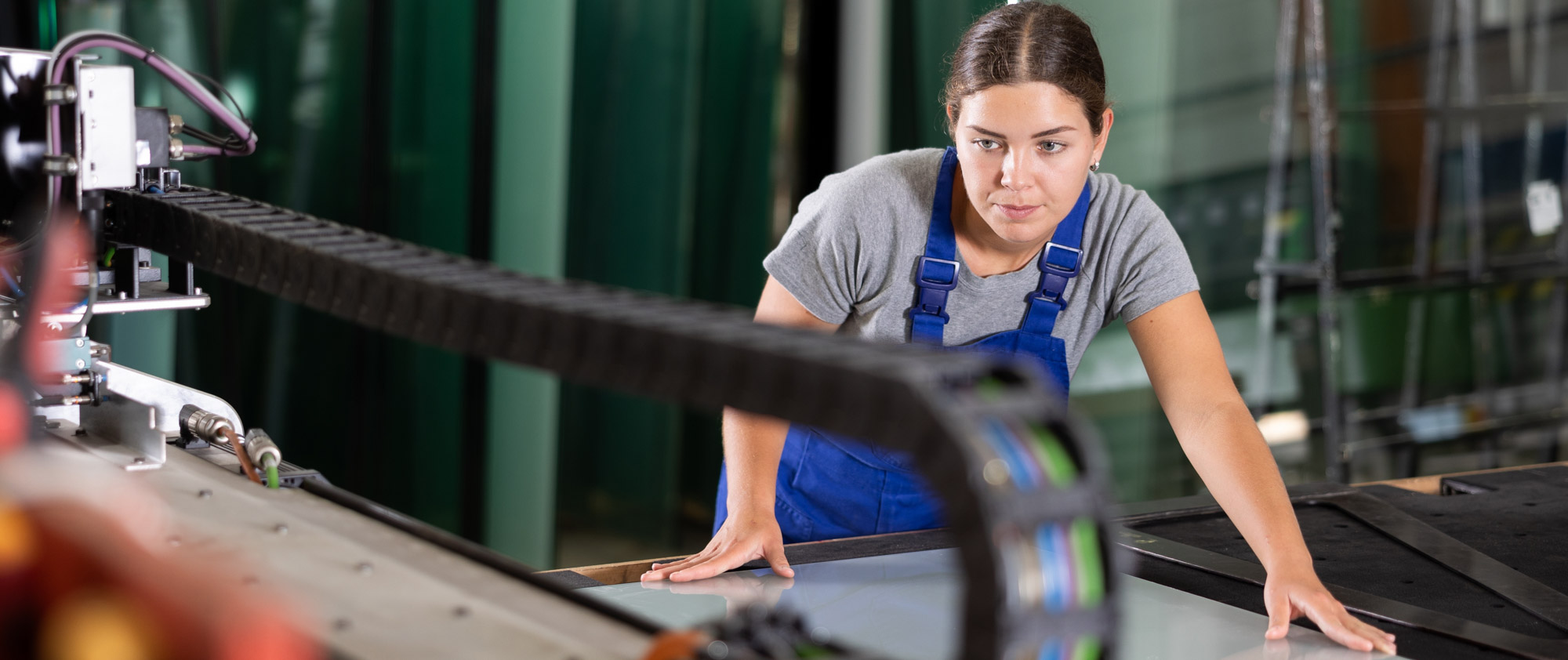
Choose Technological and industrial production if you like practical work with tools, machines, materials and technical equipment. In this programme, you learn to plan tasks, understand technical drawings, measure accurately, and make, assemble, repair and maintain products and equipment. You work in workshops and production settings, and you use digital tools to design, troubleshoot, and record your work. You also learn how to work safely, follow work instructions and check the quality of what you do.



an aluminium constructor, a welder or a sheet metal worker
a toolmaker or an instrument and toolmaker
a laboratory technician or a chemical processing technician
an industrial sewer, an industrial textiles technician (knitwear) or a laundry technician
a motor vehicle body repair technician, a motor vehicle mechanic or a vehicle sprayer
logistics operator or transport driver
a construction machinery, an agricultural machinery or an engine mechanic
a drill operator or a drill and rig operator
a seaman or a ship engine mechanic
Relevant workplaces
You can take further education at a tertiary vocational college. A tertiary vocational education is a short vocational further education meant for those who have taken vocational education and training.
You can take the master certificate examination if you have the trade or journeyman’s certificate in a trade that comes under the master craftsman’s programme, and have sufficient experience. The master course of studies qualifies you for a management or middle-management position within your trade area, and gives you the competence to start up your own company.
You can take a Vg3 supplementary programme for general university admissions certification – after Vg2 or – after achieving vocational competence. You will then have the option to take higher education at a university college or university. Remember that some study programmes, such as for instance engineering, science and medical studies, require you to have certain science subjects.
You can also apply for admission to higher education after a preliminary course or by the Y-path, the vocational pathway to higher education. The Y-path is intended for those with relevant vocational experience. Preliminary courses and the Y-path are most commonly used for science and engineering studies.